
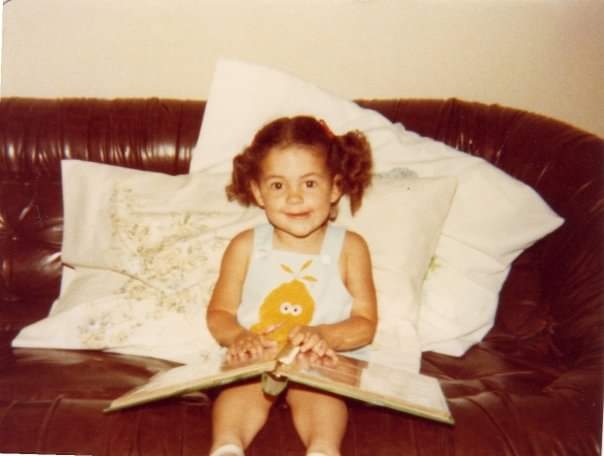
In a box tucked away with some of my most precious memories is my very first copy of Charlotte’s Web by E.B. White. I’m not even sure it holds the shape of a book anymore. It’s more like a haphazard pile of pages without a spine under a tattered front cover. I still remember how excited I was to buy this specific copy of the book through the Scholastic book sale at school. That day, eight-year-old me rushed to class, eager to turn in the white envelope with jingling coins inside in exchange for a story I could hold and take home to keep forever.
And what a story it was. Charlotte’s Web was the first book that prompted me to see the world through eyes that weren’t my own. The first time I read it I became Fern Arable, walking down the dusty road to Uncle Homer’s barn to meet the pig that would change my view of dirty barnyard animals. The words on the pages became so alive to me that I swore I could see and smell the farm. I laughed at the junk-collecting antics of Templeton the rat, beamed with pride when Wilbur went to the fair, and cried heavy tears when Wilbur said goodbye to his trusted friend Charlotte. It was an experience that captured my heart and brought me back to those pages again and again, pages that must have been made of magic to make me long for a loving friendship with a spider. I didn’t know how exponentially the magic would be multiplied decades later as I read the book to my son, and he developed his own unique relationship with that same spider and her beloved pig.
Books are so much more than objects on a shelf. They are treasure boxes filled with words that are key to discovering the world through other eyes. Books give us adventure, exploration, reflection, perspective, and the opportunity to understand and feel understood. They are the voice of another that helps us find our own. And when we read with our children, we give them access to the discovery of who they are.
Reading in our current culture tends to put the emphasis on convenient data and opinions that can be presented in bullet points, images, and 280-character Tweets. This approach encourages consumption of information, while reading a book is all about engagement and relationship. When you sit down to read with your children, they’ve begun to connect and learn before you even get to the first word. Your intentional focus immediately conveys that there is something special about them, and about the book you hold in your hands.
In my years managing the children’s department of a local bookstore, I observed that parents sometimes speed through the books and miss much of their magic in the process. Every part of a book has something to say, from the title and author’s name on the front cover, to the design of the endpapers, to the way they introduce the concept that stories have a beginning, middle, and end. Books also liberate us to think and to feel by giving the chance to go back to the words over and over and receive them in new ways each time that we do.
One of the things I love most about books is that you can carry the words and stories with you anywhere, and dive back in to be inspired wherever you find yourself. This probably explains the well-worn condition of my copy of Charlotte’s Web. It exemplifies how meaningful it is to me that someone can pour their heart out on paper, bind it into a compact form, and send it out into the world for other hearts to hold, soak in, contemplate, and share time and again. And maybe even feel encouraged to pour their own hearts on paper too.

 Carrie Joy(ful)