
As a woman, wife, and mother with a full-time job, I’m no stranger to the concept of wearing several (figurative) hats at once. While I can identify with a long list of roles, I must admit that “gardener” has never been included on that list. Historically my relationship with plants has been pretty neglectful and downright murderous, with yours truly being the guilty party in both cases. This probably explains why I enjoy randomly photographing flowers and landscapes when I’m outdoors. I feel resigned to capture and enjoy the natural beauty from a distance because in my care, living greenery tends to lose its luster – and ultimately its life.
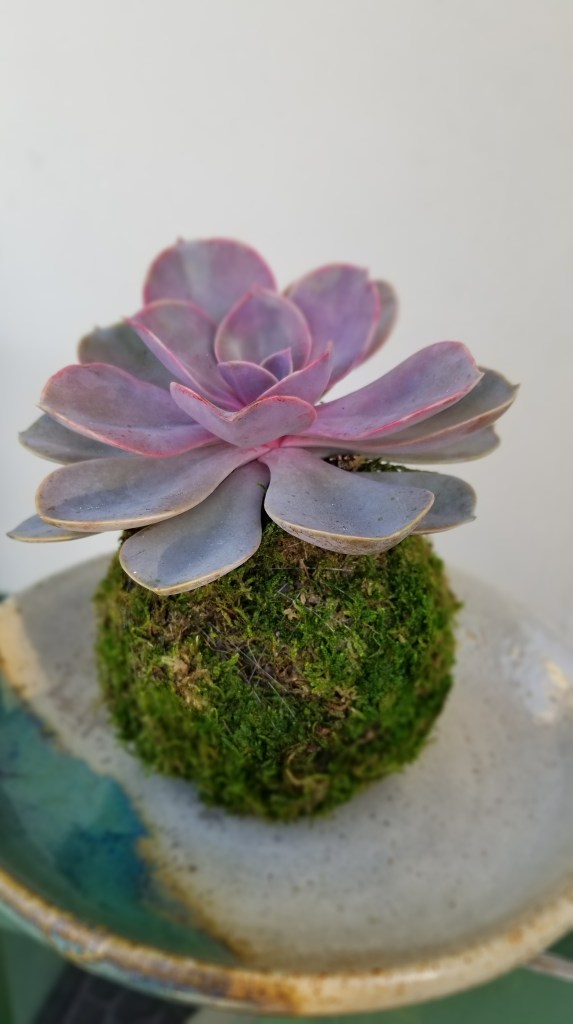
So it was quite out of character for me to purchase this lovely Kokedama for myself a couple of weeks ago. I bought it from a friend who makes botanical magic with her succulent creations. She gave me hope that Koke (yes, I went so far as to give my new plant a name) and I would become fast friends. As long as I give her plenty of natural light and soak her base in water once every couple of weeks, Koke and I should have a lasting, pleasant relationship.
Jumping into this companionship with Koke is helping to shape a new perspective for me. I have a tendency to think several steps ahead, which often hinders me from pursuing new opportunities or creative endeavors. I’ve been guilty of allowing my own thoughts and worries, lack of knowledge or experience to cause me to give up on worthwhile things. It’s a thought process based in fear, which in this case would usually prompt me to skip buying the plant to avoid my inevitably killing it. The problem is that I’d miss out on the beauty and growth as well.
This new year and new decade are calling me to a new approach. What the past has taught me about the future is that I need to be more present.
In reading about Kokedama, several words related to this style of planting have taken hold of me. The Kokedama is both humble and beautiful, the rich, colorful life growing from a simple ball of soil. It lives free from the confinement of a pot or other limiting container. Its style is related to Kusamono, which shifts the focus from one dramatic, eye-catching plant to the more simple, accentuating plants that surround and support it. It’s also closely associated with Nearai bonsai which are removed from their pots and purposefully displayed with roots exposed.
Humble. Colorful. Simple. Free. Purposeful. Exposed. Unafraid.
These are the words I’m carrying into 2020 as guideposts for how I want to live.
Wishing you and those that you love a nurtured, learning, growing, and thriving new year.

 Carrie Joy(ful)